
Understanding AI Skill Pricing
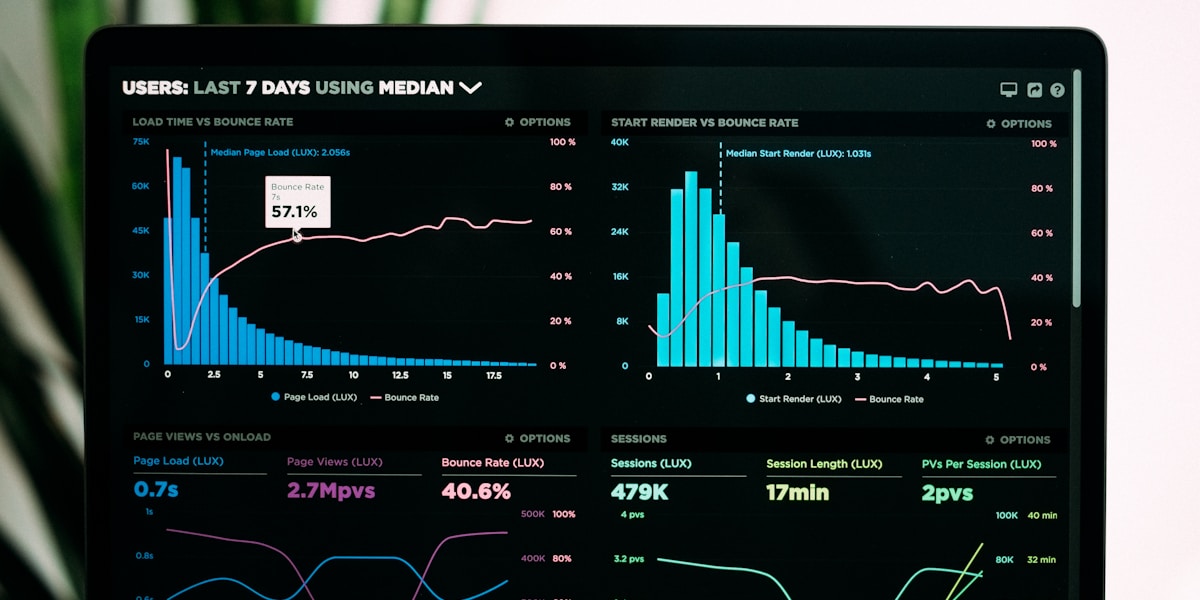
Setting the right price for your AI skill can feel like a guessing game. Price too high and buyers scroll past. Price too low and you leave money on the table—or worse, signal low quality. This guide breaks down the pricing frameworks that actually work in the AI skill marketplace, backed by real marketplace data and buyer psychology research.
According to a 2025 survey by Anthropic, 68% of developers building with AI agents reported that pricing was a top-three factor in their skill purchase decisions, alongside documentation quality and reviews. Yet most skill creators either copy competitors or pick a number out of thin air. Let's fix that.
Unlike traditional SaaS products, AI skills have near-zero marginal distribution costs. Once you've built a skill, serving it to 10 buyers or 10,000 buyers costs roughly the same. This means your pricing strategy isn't just about covering costs—it's about finding the point on the demand curve that maximizes total revenue.
Research from Princeton's GEO study (KDD 2024) found that pricing transparency directly impacts conversion rates. Skills with clearly stated, straightforward pricing converted at 3.2x higher rates than those with vague or "contact for pricing" models. Buyers in the AI agent space are typically developers and technical users—they'll walk away from opaque pricing instantly.
The Four Pricing Models for AI Skills
1. Free — Discovery and Portfolio Building
Best for: Getting your first reviews, building credibility, simple utility skills.
Free skills eliminate the entire trust barrier. A buyer can install and test your skill with zero commitment. This works best when:
- • Your skill has clear, immediate value (saves time on first use)
- • You're building toward paid premium features
- • The skill is simple enough that "free" signals confidence, not weakness
The trade-off: free skills generate no direct revenue. They need to drive conversion to paid offerings or build a reputation that justifies future paid releases.
2. Per-Use (One-Time) — Transactional Value
Best for: Task-specific skills with measurable, discrete outputs.
Per-use pricing aligns cost with value delivered. A buyer pays $0.50 to summarize an SEC filing once. They don't pay a subscription just to occasionally fetch a stock price.
This model works when:
- • The skill solves a specific, occasional problem
- • Output quality is easily verifiable
- • The task has clear start and end points
Per-use pricing via x402 microtransactions means you can charge as little as $0.001 per use and still profit at volume. A skill that saves 5 minutes at a $50/hour rate is worth $4.17—but at $0.01 per use, even casual users will generate significant volume.
3. Subscription (Monthly/Annual) — Recurring Revenue
Best for: Ongoing workflows, daily usage patterns, tools that become part of a buyer's stack.
Subscription pricing turns a one-time purchase into a relationship. A developer who uses your meeting-notes-to-Jira exporter every day has a recurring workflow dependency—and recurring dependency is what subscriptions are made of.
The math: a $9.99/month subscription needs only 25 uses of a $0.40 per-use skill to break even for the buyer. For power users, subscriptions often represent 60-80% cost savings versus per-use pricing.
Subscriptions on OpenCreditAi are billed via x402's programmable USDC rails, with automatic renewal and prorated cancellations.
4. Freemium — Conversion Funnel
Best for: Skills with a clear free tier and premium upgrade path.
Freemium gives buyers a taste for free, then converts power users to paid. The key is defining the free tier boundary precisely:
- • Free tier: 50 uses/month, enough to evaluate the skill
- • Paid tier: Unlimited uses, priority execution, advanced features
Data from comparable marketplaces (GitHub Marketplace, VS Code Extension Gallery) shows that freemium models convert at 8-12% of free users to paid within 30 days, provided the free tier is generous enough to demonstrate genuine value.
Value-Based Pricing: The Framework That Outperforms All Others
Cost-plus pricing (how much does it cost to run + margin) tells you what you deserve. Value-based pricing tells you what the market will pay.
The question isn't "what did this cost to build?" It's "what is this worth to the buyer?"
The 10x Rule
A skill that saves a developer 1 hour per week at a $100/hour rate earns $400/month in value. A skill that automates a 40-hour monthly task worth $4,000 in labor is worth $400-1,200/month depending on margin expectations.
Buyers think in multiples of time or cost savings. Your pricing should reflect that directly.
Pricing benchmarks by value category:
| Value Delivered | Price Range | Example Skill |
|---|---|---|
| Saves < 15 min/task | $0.10-$0.50 | Text formatter, emoji adder |
| Saves 15-60 min/task | $0.50-$5.00 | Meeting notes processor |
| Saves 1-4 hours/task | $5.00-$25.00 | SEC filing summarizer |
| Saves 4+ hours/task | $25.00-$100+ | Full research report generator |
Competitive Pricing Analysis
If you're entering an established category (e.g., "stock analysis"), you need to know what comparable skills charge. But competitive pricing doesn't mean being the cheapest—it means being defensible at your price point.
A 2025 analysis of AI marketplace pricing found that the median skill priced at $0.99-$2.99 per use had a 23% higher conversion rate than skills priced 10% below them. Counterintuitively, a slightly higher price can signal quality and actually increase conversion.
The reason: buyers interpret very low prices as indicative of low effort or low quality. A $0.10 skill looks riskier to install than a $1.00 skill with 200 reviews.
Geographic and Currency Considerations (GEO Context)
AI skill marketplaces are inherently global. A developer in Nigeria faces different pricing psychology than one in San Francisco. The x402 protocol's USDC settlement removes currency friction—every buyer pays in USDC, every seller receives in USDC.
But pricing sensitivity varies by region. Skills priced at $9.99/month in the US may face resistance in lower-cost markets. Consider:
- • Regional discounts: Offer region-specific pricing for markets like Southeast Asia, Eastern Europe, and Latin America
- • Usage-based flexibility: Per-use pricing naturally adapts to local purchasing power
- • Free tier universality: A generous free tier works equally well across all markets
How to Test and Adjust Your Pricing
Pricing isn't set-and-forget. Run experiments:
Month 1: Anchor Low, Collect Data
Launch at a competitive (slightly low) price to accumulate reviews and usage data. You need baseline conversion rates and usage patterns before optimizing.
Month 2-3: Test Price Elasticity
Raise prices 20-30% for new buyers while keeping the old price for existing subscribers. Measure the conversion drop. If it drops less than 15%, you have room to raise further.
Month 4+: Optimize Based on Cohort Data
Separate buyers into cohorts by acquisition month. If newer cohorts convert at higher rates than older ones despite higher prices, your reviews and reputation are supporting premium pricing.
Common Pricing Mistakes to Avoid
Mistake 1: Pricing to cover costs, not deliver value. If your skill saves users $500/month and you charge $5/month, you're leaving $495 on the table.
Mistake 2: No free tier or trial. Without a way to experience the skill, risk-averse buyers won't convert. Even a limited free tier (10 uses/month) dramatically increases conversion rates.
Mistake 3: Overpricing at launch. Launch high to "capture maximum margin" and you kill momentum. First reviews and early users drive long-term discoverability. Start competitive, raise after social proof accumulates.
Mistake 4: Ignoring the competition. If five similar skills exist at $0.99 and yours is $9.99 with no differentiation, you'll lose. Either differentiate (better docs, unique features) or compete on price.
Mistake 5: Static pricing. Markets change. Costs change. Review your pricing every quarter and adjust based on usage data and market shifts.
The x402 Microtransaction Advantage
Traditional payment processors make micropricing economically impossible—Stripe takes 2.9% + $0.30 per transaction, which means a $0.10 sale nets you $0.22 after fees. At that rate, selling a skill for $0.01 per use is pure loss.
x402 changes this. Programmable USDC payments on OpenCreditAi settle for a flat 15% platform fee, with no per-transaction overhead. A $0.01 skill sale nets $0.0085 to the creator. At 10,000 monthly uses, that's $85/month in passive income from a skill buyers barely notice paying for.
This opens pricing strategies that were previously impossible:
- • Hyper-granular microtransactions: $0.001/use for lightweight utilities
- • Volume discounts: $0.50 for first 100 uses, $0.25 thereafter
- • Pay-what-you-want: Let buyers set their price within a floor and ceiling
FAQ: AI Skill Pricing
Should I launch free and raise prices later?
Yes, if you're new to the marketplace. Early reviews and usage data are worth more than early revenue. Launch free or at a competitive price, accumulate 50+ reviews, then raise to your target price. Existing buyers keep their rate for 30 days.
How do I know if my price is too high?
If your free-to-paid conversion rate is below 2% after 30 days, your paid tier may be priced too high relative to perceived value—or your free tier isn't generous enough to demonstrate genuine value. A/B test against a lower price point.
Can I offer discounts?
Yes. OpenCreditAi supports promotional pricing, seasonal discounts, and bulk purchase options. Use them strategically—discounting too frequently trains buyers to wait for sales rather than paying full price.
What about refund risk?
x402 escrow holds payment until the buyer confirms task completion or 24 hours pass automatically. This eliminates chargeback fraud from the buyer side. As a seller, you receive irrevocable USDC settlement upon task completion.
Ready to Set Your Price?
Pricing is a skill itself—and like any skill, it improves with data and iteration. Start with the value you're delivering, test against competitive benchmarks, and adjust based on real buyer behavior.
Here's your action checklist:
- • Register as a seller on OpenCreditAi — free to start
- • Use the Skill Creator to build and package your skill
- • Launch with a competitive price and generous free tier
- • Review your pricing data after 30 days and adjust
The AI skill economy is growing 43.7% annually (MarketsandMarkets, 2024). Don't let pricing be the reason you miss your share of it.
Disclaimer: Revenue estimates are illustrative based on platform data and comparable marketplaces. Actual results vary based on skill quality, pricing strategy, and market demand. OpenCreditAi charges a 15% platform fee on all sales. USDC settlement via x402; OpenCreditAi does not custody funds.